IC Test Hooks are really useful tools. However, they can be slightly fiddly to assemble if you’ve never done it before.


This tutorial breaks down the steps to make a useful set of test leads for your electronics lab.

IC Test Hooks are really useful tools. However, they can be slightly fiddly to assemble if you’ve never done it before.
This tutorial breaks down the steps to make a useful set of test leads for your electronics lab.
New tutorial added! Make your own Stevenson Screen weather station using a HTU21D temperature and humidity breakout board and a NeoPixel Ring.


For all the details check out the detailed tutorial.
Whilst flicking through an old user manual for a Toshiba Tosdic 215D single loop controller I found this gem.

The user manual suggests that when interfacing inductive loads to the Tosdic 215D’s digital outputs, the user must implement sparkle eliminating diodes.
My Japanese language skills are relatively poor so I’m not sure if sparkle eliminating diode is a literal translation or a mistake from the original Japanese user manual.
Personally I like sparkle eliminating diode as it is visually descriptive. A much better explanation than the traditional freewheeling or flyback diode.
Within the Da Vinci 1.0 extruder is a small PCB. It serves a few functions and was pretty straight forward to trace out the circuitry to create a schematic.

After clearing out an old cupboard at work, I stumbled across a couple of old Motorola MC68705P3S microprocessors. What immediately caught my attention with these chips compared to others, was that they had a ceramic package which is not very common. Additionally, they have a glass window over the chip’s die (more details on the reason for this later) allowing you to peer deep inside the chip.

Some degree of success has been achieved with printing Ninjaflex with a Da Vinci 1.0 printer. Today, three test prints were made; one is of marginal quality but it was the first. The second for the day, turned out very well and the final print was OK. Each of the prints had differing infill settings so there is still some refining to do.
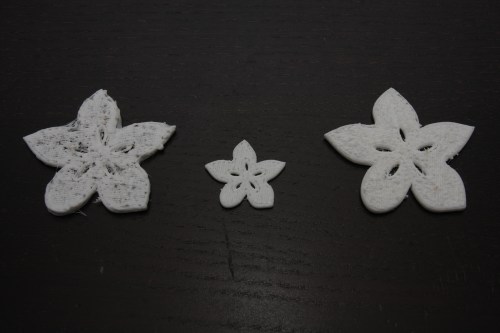
Can flexible filaments such as Ninjaflex or TPE be used with a stock Da Vinci 3D printer? Probably.
Preliminary testing and multiple trials indicate that it is possible to use a stock Da Vinci extruder with minimal modifications to print this unique material. Additionally, it may be possible to use a stock firmware (1.1.J) and XYZware to make objects printed from Ninjaflex.
Successful progress and encountered pitfalls are being documented as this journey unfolds.
Installed at the rear of the Da Vinci print bed is a small NTC thermistor. Some experimenting was undertaken to determine the characteristics of the thermistor.

Using substitute resistances, the temperature curve of the print bed thermistor was determined.
The Da Vinci 1.0 has a small NTC thermistor embedded in the extruder. This provides the printer with temperature measurements of the extruder.
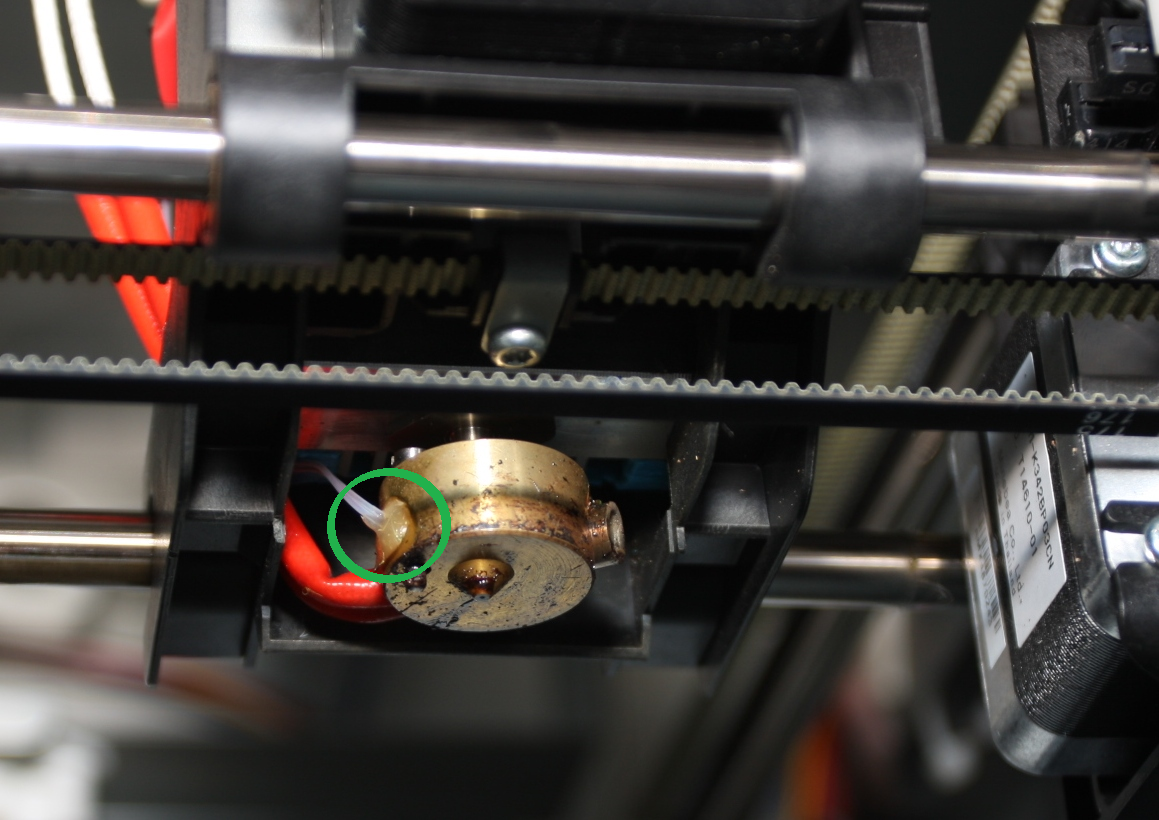
After some experimenting, the extruder’s thermistor temperature response curve has been inferred through substituting known values of resistance for the thermistor. All the measured values have been compiled.
 SteelCity Electronics